Dust Mite Allergy: Why Air Duct Cleaning Is Necessary
What Is Household Dust and Where Does It Come From?
Dust is everywhere. It settles on furniture, collects under beds, appears around air vents and sometimes seems to return only hours after a room has been cleaned.
But where does household dust actually come from?
There is no single substance called household dust. Indoor dust is a complex mixture of particles originating both inside and outside a building. Depending on the property and environment, it may contain soil, textile fibers, skin particles, pollen, pet dander, dust-mite material, construction particles, lint and other fine particulate matter.
Your HVAC system, air ducts, dryer, carpeting, furniture, pets, windows, doors and outdoor environment can all influence how much dust is present inside a home or business.
This explains why simply wiping furniture may not solve a persistent dust problem. You remove the dust that has already settled, but the source may continue producing or introducing new particles.
For people concerned about dust-mite allergies, indoor allergens and indoor air quality, understanding where dust originates is an important first step toward controlling it.
For additional information about indoor air quality, see the U.S. Environmental Protection Agency’s Indoor Air Quality resources.
Dust Mite Allergy: What’s Hiding in Household Dust?
Dust mites are microscopic organisms commonly found in indoor environments. They tend to thrive in warm and humid conditions and are often associated with:
- Mattresses and pillows
- Bedding
- Carpeting and rugs
- Upholstered furniture
- Fabric-covered surfaces
Dust mites themselves are extremely small, but allergens associated with dust mites can become part of household dust.
This is an important distinction. When someone says they are “allergic to dust,” the reaction may actually involve particular allergens found within the dust rather than dust being one uniform substance.
According to the American College of Allergy, Asthma & Immunology, dust-mite exposure can be associated with allergic symptoms in susceptible individuals.
Dust-mite allergy management therefore needs to address the broader indoor environment rather than focusing exclusively on one area of the home.
Indoor Allergens: More Than Just Dust Mites
Dust mites aren’t the only potential allergens found indoors.
Indoor dust can contain or transport numerous types of allergenic material.
Pet Dander
Cats, dogs and other animals can produce allergens associated with skin and other biological material. Very small particles can become airborne and eventually settle throughout a building.
Pollen
Pollen doesn’t stay outdoors.
It can enter through open windows and doors and can also be carried indoors on clothing, footwear and pets.
Mold
Moisture problems can allow mold to develop on suitable materials. Mold spores and fragments may then contribute to the indoor particle environment.
Pest Allergens
In some buildings, cockroach and other pest-related material can also become part of indoor dust.
The important point is that dust and allergens are related, but they aren’t necessarily the same thing.
The Mayo Clinic’s guide to allergy-proofing your home provides additional recommendations for reducing exposure to common indoor allergens.
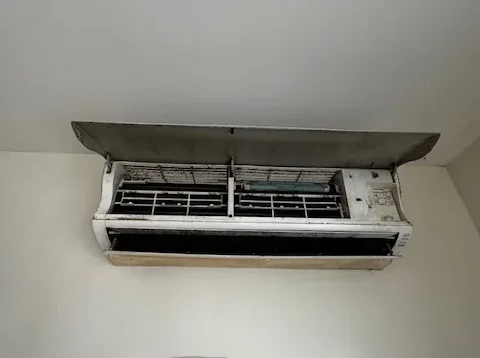
Dust in Air Ducts: Can Your HVAC System Accumulate Dust?
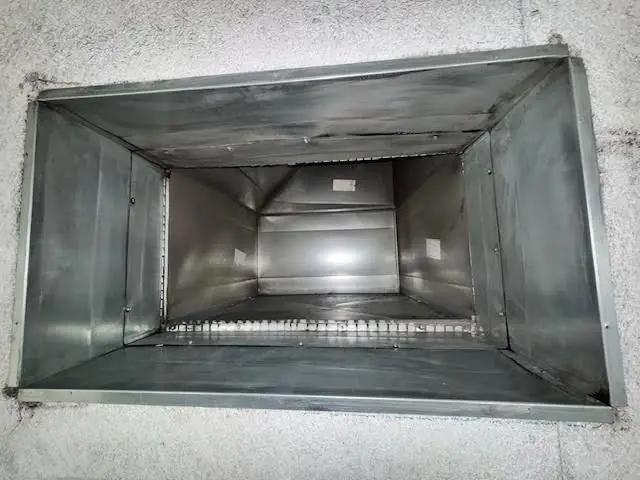
Yes. Dust and debris can accumulate within portions of HVAC systems and air ducts over time.
An HVAC system continually moves large quantities of air through a building. Return-air pathways bring air back toward the HVAC equipment, while supply ducts distribute conditioned air into rooms.
The system may include:
- Supply air ducts
- Return air ducts
- Registers and grilles
- Blower components
- Heating and cooling equipment
- Evaporator coils
- Drain pans
- Filters
However, finding some dust inside an air duct does not automatically mean the entire system requires professional cleaning.
The EPA recommends considering duct cleaning under certain circumstances, including substantial visible mold growth on appropriate HVAC surfaces, vermin infestation, or excessive accumulation of dust and debris where particles are actually being released into occupied spaces.
Read the EPA’s complete guidance: Should You Have the Air Ducts in Your Home Cleaned?
That is why professional inspection should come before automatically deciding that a duct system needs cleaning.
Air Duct Cleaning: Why Cleaning Only the Vent Isn’t Enough
One common misconception is that air duct cleaning means removing the register and vacuuming several inches behind it.
A professional HVAC cleaning process can be considerably more involved.
Depending on the system and scope of work, professional equipment can be used to place portions of the duct system under negative pressure while specialized agitation or compressed-air tools loosen accumulated dust and debris for collection.
This is significantly different from simply vacuuming the visible register.
Professional HVAC cleaning may need to address accessible components throughout the system rather than only the parts homeowners can see.
The National Air Duct Cleaners Association provides consumer information explaining HVAC system cleaning and what homeowners should consider when choosing a contractor.
BenzVac provides professional residential and commercial air duct cleaning in New York and New Jersey. Learn more about our professional air duct cleaning services.
Can Air Duct Cleaning Help With Dust Mite Allergies?
This question needs to be answered carefully.
Air duct cleaning is not a medical treatment for dust-mite allergy, and professional duct cleaning cannot eliminate all allergens from a home or office.
Major reservoirs for dust-mite allergens can exist in mattresses, bedding, carpeting and upholstered furniture. Pet allergens, pollen and other particles can also originate independently of an HVAC system.
However, if an HVAC system contains excessive accumulations of dust and debris, professionally removing that material addresses one potential reservoir of particles within the building.
A comprehensive dust and allergen-control strategy can include:
- Appropriate HVAC filtration
- Regular vacuuming and cleaning
- Washing bedding
- Controlling indoor humidity
- Addressing water and moisture problems
- Reducing sources of outdoor dust
- Maintaining HVAC equipment
- Professional duct cleaning when inspection indicates it is warranted
Instead of expecting one service to eliminate allergies, homeowners should look at the entire indoor environment.
Household Dust: Why Does My House Get Dusty So Fast?
Have you ever cleaned your home thoroughly and discovered another layer of dust a few days later?
Dust constantly enters, forms and moves throughout a building.
Walking across carpeting can disturb settled particles. Opening doors and windows allows outdoor material to enter. Pets carry particles through the house. Clothing, towels and bedding shed fibers.
Common household dust sources include:
Clothing and Fabrics
Clothing, bedding, curtains, towels and upholstered furniture continually release small fibers.
Carpeting
Carpets can capture material brought indoors as well as particles generated inside the home. Activity can disturb some of this settled material.
Pets
Pets contribute hair and dander and can transport outdoor material on their paws and coats.
Cooking
Cooking can generate airborne particles, grease-containing aerosols and moisture.
Paper and Cardboard
Boxes, packaging and paper products can contribute fibers and particles.
Construction
Drywall sanding, drilling, cutting wood, demolition and renovation can produce very large quantities of fine dust.
If your home becomes dusty again shortly after cleaning, the better question may therefore be:
Where is the new dust coming from?
Dryer Lint and Dust: Your Laundry Room May Be a Hidden Source
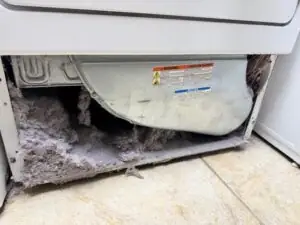
Your dryer is another source of fibers and dust that homeowners sometimes overlook.
As clothing tumbles, fibers separate from fabrics. We generally call this material lint.
The lint screen captures a significant amount, but smaller material can enter the dryer exhaust system.
The exhaust pathway can include the dryer connection, transition duct, exhaust duct, elbows and exterior termination.
When lint accumulates inside the exhaust system, airflow can become restricted.
Possible warning signs include:
- Clothes taking longer than usual to dry
- Multiple drying cycles
- Dryer or clothing becoming unusually hot
- Weak airflow at the exterior termination
- Excessive lint around the dryer
- Unusual hot or burning odors
Lint is combustible, making proper dryer exhaust maintenance an important safety consideration in addition to its effect on dryer performance.
If lint constantly appears around the laundry room, inspect the exhaust connections as well. Damaged, loose or poorly connected ductwork can allow fibers to escape into the surrounding area.
Learn more about BenzVac dryer vent cleaning services.
City Dust: Why New York Homes and Offices Can Be So Dusty
People living and working in urban environments face additional sources of dust.
New York City dust can originate from many outdoor sources, including road activity, soil, construction and building work.
Particles can enter a building through:
- Open windows
- Doors and entrances
- Ventilation openings
- Gaps and penetrations
- Clothing and shoes
- Pets
A Manhattan apartment next to a construction project may experience a completely different dust environment than a suburban house surrounded by vegetation.
Properties close to heavily traveled streets, construction projects and areas with significant pedestrian activity can experience noticeable outdoor dust intrusion.
Once particles enter the building, they can settle on floors, furniture and other surfaces and become mixed with dust generated indoors.
Office Dust: Why Commercial Buildings Need Attention Too
Dust is not only a residential problem.
Offices and commercial buildings can have numerous sources of particles, including:
- Carpeting
- Upholstered office furniture
- Paper and cardboard
- Printers and equipment
- Heavy foot traffic
- Outdoor air
- Construction activity
- Ceiling spaces
- HVAC systems
- Storage areas
Commercial HVAC systems may serve large areas and operate for extended periods.
When employees repeatedly notice dusty surfaces or material accumulating around supply and return registers, the source should be investigated rather than automatically assuming ordinary housekeeping is responsible.
Possible solutions can involve filtration, housekeeping, source control, duct sealing, HVAC maintenance or professional HVAC cleaning depending on the cause.
BenzVac provides commercial air duct and HVAC cleaning services throughout New York and New Jersey.
HVAC Filters: Your First Line of Defense Against Airborne Dust
HVAC filtration is an important part of controlling particles moving through forced-air systems.
But simply installing the highest-efficiency filter available is not necessarily the correct approach.
The filter needs to be appropriate for the HVAC equipment and airflow requirements.
Equally important is proper installation.
Air should travel through the filter rather than around it. A poorly fitting filter can allow some air to bypass the filtration media.
Filters should be inspected and replaced according to equipment requirements, manufacturer recommendations and actual building conditions.
Properties with pets, construction activity or unusually high dust levels may require more frequent attention.
Humidity, Dust Mites, Allergens and Mold
Moisture can significantly affect indoor environmental conditions.
Elevated humidity can create favorable conditions for dust mites, while persistent moisture problems can support mold growth on suitable materials.
Possible moisture sources include:
- Plumbing leaks
- Roof leaks
- Wet basements
- Condensation
- Poor bathroom ventilation
- HVAC drainage problems
- Improper dryer exhaust
- Excessive indoor humidity
If mold or recurring moisture is discovered, simply removing visible dust will not correct the underlying problem.
The moisture source needs to be identified and addressed.
How to Reduce Dust and Indoor Allergens
There is rarely one solution for excessive indoor dust.
A more effective strategy addresses several sources simultaneously.
Vacuum regularly. Pay particular attention to carpeting, rugs and upholstered furniture.
Use dust-capturing cleaning methods. Dry dusting can redistribute particles. Appropriate damp cleaning can help capture settled dust.
Maintain HVAC filters. Check filters regularly and replace them according to the system’s requirements.
Control moisture and humidity. Correct leaks, condensation and other moisture problems.
Wash bedding regularly. This can be particularly relevant when controlling dust-mite exposure.
Control outdoor dust intrusion. Consider open windows, shoes, construction projects and other pathways through which outdoor particles enter.
Maintain dryer exhaust systems. Clean the lint screen routinely and have the exhaust system inspected when airflow or lint accumulation indicates a possible problem.
Inspect the HVAC system when appropriate. Unusual debris, suspected contamination, excessive dust accumulation or particles apparently coming from registers may justify professional inspection.
Most importantly, find the source instead of repeatedly cleaning the symptom.
When Should Professional Air Duct Cleaning Be Considered?
Not every dusty home requires professional air duct cleaning.
However, professional inspection may be appropriate when you notice:
- Excessive visible debris inside accessible ductwork
- Particles apparently being discharged from registers
- Significant contamination following construction or renovation
- Evidence of pests within ductwork
- Suspected mold associated with HVAC components
- Unusual accumulation of debris in the system
When professional cleaning is warranted, addressing the relevant HVAC components can remove accumulated material from the system.
That should be considered one part of a broader strategy that may also include filtration, housekeeping, moisture control, source control and dryer exhaust maintenance.
Dust Mite Allergy and Air Duct Cleaning: The Bottom Line
Dust is not a single substance and usually does not have a single source.
A dusty home or office may simultaneously contain dust-mite allergens, pet dander, pollen, textile fibers, tracked-in soil, construction particles, city dust and dryer lint.
Some material may also accumulate inside HVAC components and ductwork.
For people concerned about dust-mite allergy and indoor allergens, the best approach is therefore to investigate the entire indoor environment.
Air duct cleaning cannot cure allergies or eliminate every allergen in a building. However, when inspection identifies excessive dust, debris or other contamination inside an HVAC system, professional cleaning can remove that accumulated material from the system.
Combined with appropriate filtration, regular cleaning, humidity control, dryer maintenance and source reduction, this can be part of a comprehensive approach to maintaining a cleaner home or workplace.
Professional Air Duct and Dryer Vent Cleaning in New York and New Jersey
BenzVac Inc. provides professional air duct cleaning, HVAC system cleaning and dryer vent cleaning for residential and commercial properties throughout New York and New Jersey.
If you are seeing excessive dust around air vents, dealing with post-construction dust, concerned about accumulated debris inside your HVAC system or experiencing poor dryer airflow, professional inspection can help identify the source and determine an appropriate cleaning approach.
Visit BenzVac to learn more about professional air duct, HVAC and dryer vent cleaning services.