
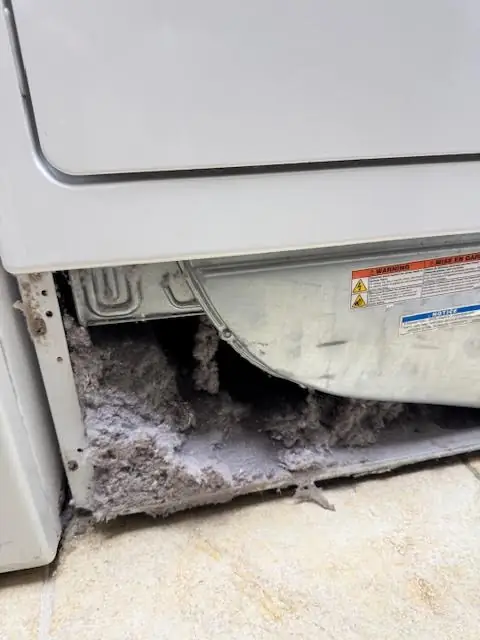
Why Dryer Suddenly Stopped Heating?
When a dryer suddenly stops heating, it does not automatically mean the appliance needs to be replaced. Some causes are simple, such as an incorrect setting or a partially tripped circuit breaker. Other causes involve restricted airflow, a damaged exhaust pipe, a blown thermal fuse, a failed heating element, or a gas-ignition problem.
The order of inspection matters. Replacing a fuse or heating component without correcting a blocked vent may lead to another failure. A clean, properly installed exhaust system allows heat and moisture to leave the dryer and helps the appliance operate within its intended temperature range.
Understanding How a Clothes Dryer Works
A clothes dryer performs three basic tasks: it rotates the drum, produces heat, and moves warm, moisture-laden air out of the home or building. The blower pulls air through or across the heat source, sends it through the tumbling clothing, and pushes it into the exhaust duct. The air then travels through the dryer vent to an exterior termination.
If the drum turns but the clothes remain cold or damp, one part of this process has been interrupted. The dryer may not be generating heat, or it may be overheating because the exhaust airflow is restricted and a safety control has stopped the heating cycle.
How an Electric Dryer Produces Heat
Most full-size electric dryers use a 240-volt electrical supply. An electric resistance element heats the moving air while thermostats, thermistors, and safety devices control temperature.
A dryer may still tumble if one side of a double-pole breaker trips, yet the heating circuit may not receive the voltage it requires. A failed heating element, loose electrical connection, control problem, or open thermal fuse can also result in no heat.
How a Gas Dryer Produces Heat
A gas dryer uses electricity to operate the motor, controls, igniter, and sensors, but it uses natural gas or propane to produce heat. Depending on the model, the ignition system may include an igniter, flame sensor, gas-valve coils, burner assembly, and temperature controls.
If the dryer tumbles but the burner does not ignite or stay lit, the cause may involve the gas supply, ignition components, airflow, or a safety device.
Gas-system diagnosis and repair should be performed by a qualified technician. If you smell gas, do not operate switches or appliances. Leave the area and contact the gas utility or emergency services from a safe location.
What Dryer Sensors and Safety Controls Do
Modern dryers use several controls to manage heat, drying time, and safety. The names and locations vary by manufacturer, but common devices include:
- Moisture or humidity sensors estimate how wet the load remains and may shorten or extend an automatic cycle.
- Thermistors and cycling thermostats monitor or regulate operating temperature.
- High-limit thermostats interrupt heat if the temperature rises beyond the normal operating range.
- Thermal cutoffs and thermal fuses provide overheat protection. Some are one-time devices that must be replaced after they open.
- Flame sensors and ignition controls help manage burner operation in gas dryers.
- Door, belt, and motor switches may prevent operation when the dryer detects an unsafe or incomplete condition.
A moisture sensor commonly affects cycle length rather than causing a complete loss of heat. By contrast, a high-limit control or thermal fuse may interrupt the heating circuit after the dryer becomes too hot. The underlying reason for the overheating must be found before the dryer returns to service.
Common Reasons a Dryer Stops Heating, Dryer not Heating
1. Clogged Dryer Vent or Lint Blockage
Restricted airflow is one of the first conditions to investigate. Lint can accumulate in the flexible connector behind the dryer, inside elbows and long duct runs, at the exterior hood, or within a shared commercial or multifamily riser.
As resistance increases, drying time becomes longer and heat builds inside the appliance and duct system.
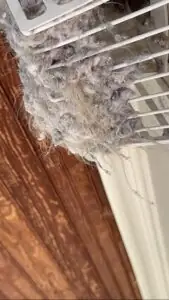
Typical warning signs include:
- Clothes requiring more than one cycle
- Weak airflow at the exterior outlet
- A dryer or laundry room that feels unusually hot
- A burning-lint odor
- The dryer stopping during a cycle
Cleaning only the lint screen does not clean the concealed dryer duct.
2. Bird Nests, Rodents, and Insects
Outdoor vent openings can attract birds, squirrels, mice, and insects, particularly when the termination is damaged, stuck open, or missing. Nesting material and debris can substantially reduce airflow.
Never install a fine screen over a dryer exhaust because lint can collect on it. The exterior termination should use a dryer-approved damper that opens freely while the dryer is operating.
3. Crushed, Disconnected, or Damaged Dryer Pipe
A transition duct may be crushed when the dryer is pushed too close to the wall. Screws protruding into a duct can catch lint, excessive bends can slow airflow, and disconnected sections can release heat, moisture, and lint into a wall, ceiling, or utility space.
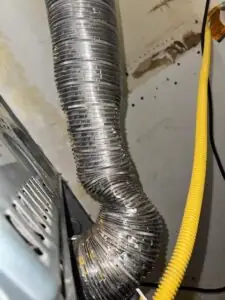
Plastic or thin foil-style connectors may also be unsuitable under the appliance manufacturer’s instructions or applicable building requirements. A damaged or poorly installed duct should be corrected with approved materials and proper clearances.
4. Failed Electric Heating Element, Why Electric Dryer not heating
The resistance coil in an electric dryer can break or short after years of heating and cooling. A failed element may produce no heat, intermittent heat, or abnormal overheating, depending on how it fails.
Testing usually requires disconnecting power, opening the appliance, and measuring electrical continuity and insulation. This work is best handled by a qualified appliance technician.
5. Blown Thermal Fuse or Thermal Cutoff
A thermal fuse does not normally pop back into position like a reset button. Many dryer thermal fuses are one-time safety devices.
If the fuse opens, the dryer may stop heating or may stop running entirely, depending on the model. Replacing the fuse without identifying the cause is incomplete because restricted airflow, a blocked exhaust, a failed thermostat, or another overheating condition may cause the replacement to fail again.
6. Tripped Breaker or Power-Supply Problem
An electric dryer may run on part of its electrical supply while the heating circuit remains inactive. Check whether the double-pole dryer breaker has tripped and follow the appliance manual for safe reset instructions.
If the breaker trips again, the cord or receptacle is discolored, or there is evidence of arcing or overheating, stop using the dryer and call a licensed electrician or qualified appliance technician.
7. Gas-Ignition or Gas-Supply Failure
A gas dryer may fail to heat because:
- The gas shutoff is closed
- The igniter is cracked
- The flame sensor is defective
- The gas-valve coils fail after warming
- The burner system has another fault
Because improper gas work can create fire, explosion, and carbon-monoxide risks, do not disassemble or bypass gas controls.
8. Thermostat, Thermistor, Control Board, or Wiring Problem
A defective thermostat or thermistor may report the wrong temperature or fail to control the heating circuit. Damaged wiring, loose terminals, relays, timers, and electronic control boards can produce similar symptoms.
Accurate diagnosis should be based on the model’s wiring diagram and measured test results rather than replacing parts by guesswork.
9. Cycle Setting, Load, or Moisture-Sensor Issue
Before scheduling repair, confirm that the dryer is not set to Air Fluff, No Heat, Eco, or another low-temperature mode.
Very small loads may not contact the moisture-sensor bars consistently, while overloaded drums may dry slowly even when heat is present. Clean sensor bars only as directed in the manufacturer’s manual and avoid abrasive materials that may damage them.
Quick Symptom Guide
| Symptom | Possible causes | Recommended next step |
| Drum turns but there is no heat | Setting, breaker, heating element, thermal fuse, or ignition system | Confirm settings and power, then arrange professional diagnosis |
| Dryer heats but clothes take too long | Clogged vent, crushed duct, or a long or poorly installed duct run | Inspect airflow and clean the complete exhaust path |
| Dryer becomes unusually hot | Restricted airflow, blocked termination, thermostat, or sensor fault | Stop use until the vent and dryer are inspected |
| Heat starts and then stops | Overheating protection, gas-valve coils, sensor, or control problem | Correct airflow first, then test appliance components |
| Burning smell, smoke, or gas odor | Lint overheating, wiring damage, burner fault, or gas leak | Stop use immediately and obtain qualified assistance |
How to Address a Dryer That Is Not Heating
Step 1: Stop and Check for Immediate Hazards
Stop using the dryer if you notice smoke, a burning smell, sparking, melted wiring, extreme heat, or a gas odor.
Do not continue running repeated cycles to see whether the problem corrects itself. Unplug an electric dryer only if it is safe to reach the plug. Follow emergency guidance for any suspected gas leak.
Step 2: Confirm the Cycle and Basic Utilities
Verify the selected cycle, confirm that the gas supply is available for a gas dryer, and check the electrical panel for a tripped dryer breaker.
Consult the manufacturer’s manual before resetting controls. Repeated breaker trips or recurring error codes require professional evaluation.
Step 3: Inspect and Clean the Dryer Vent First
Inspect the lint screen, the connector behind the dryer, the full duct run, and the exterior termination.
A professional dryer vent cleaning should address the complete exhaust path rather than only the visible opening. In multifamily and commercial buildings, the dryer may connect to a longer riser or common exhaust system that requires specialized access and equipment.
Step 4: Inspect the Dryer Pipe and Installation
Look for:
- Crushed connectors
- Excessive bends
- Disconnected joints
- Incorrect duct materials
- Trapped lint
- An exterior damper that does not open
The dryer should not be pushed so tightly against the wall that it restricts the exhaust. Any concealed disconnection, water intrusion, or damaged duct section should be repaired before the appliance is returned to normal use.
Step 5: Have the Dryer Tested for Internal Faults
If airflow and installation are satisfactory but the dryer still does not heat, a qualified technician can test the:
- Thermal fuse
- Heating element
- Thermostats
- Thermistors
- Wiring
- Control board
- Gas-ignition system
Provide the technician with the model number, error codes, and a description of when the heat stops.
Why Dryer-Vent Cleaning Should Come Before Repeated Part Replacement
A blocked vent forces the dryer to operate longer and at higher temperatures. That condition can stress heating components and activate high-temperature safety devices.
If a technician replaces a thermal fuse or thermostat but the exhaust remains blocked, the dryer may overheat again. Correcting airflow first helps separate a venting problem from an internal appliance failure and protects the replacement parts.
Dryer-vent cleaning will not repair every no-heat condition. It cannot restore a broken heating element, defective igniter, damaged control board, or failed wiring. However, it is an essential part of a complete diagnosis when the dryer has long drying times, weak exhaust flow, overheating, or repeated thermal-fuse failures.
Frequently Asked Questions
Can a Clogged Dryer Vent Cause the Dryer to Stop Heating?
Yes. Restricted airflow can cause excessive temperature, short cycling, error codes, or activation of a high-limit control or thermal fuse. The exact response depends on the dryer model.
Will Cleaning the Dryer Vent Restore the Heat?
It may restore normal operation if the dryer was reducing heat because of poor airflow and no one-time safety device failed.
If a thermal fuse opened or another component was damaged, the vent must be cleaned and the failed component must also be professionally diagnosed and replaced.
Why Does My Dryer Run but Not Get Hot?
Common causes include a no-heat cycle setting, partial power loss to an electric dryer, a failed heating element, a blown thermal fuse, a clogged vent, or a gas-ignition problem. The symptoms alone may not identify the failed part.
How Often Should a Dryer Vent Be Cleaned?
The appropriate interval depends on usage, duct length, number of bends, building configuration, pets, and the type of laundry being dried.
Do not rely only on a fixed schedule. Arrange an inspection when drying time increases, exterior airflow weakens, lint appears around connections, or the dryer becomes unusually hot.
Professional Dryer-Vent Inspection and Cleaning
If your dryer suddenly stopped heating, the safest first step is to determine whether the exhaust system is restricted or damaged.
BenzVac provides residential and commercial dryer-vent inspection and cleaning services in New York and New Jersey. Visit www.benzvac.com to learn more or request service.
Safety note: This article provides general information and does not replace the appliance manufacturer’s instructions or an on-site evaluation. Do not bypass thermal fuses, high-limit controls, door switches, gas controls, or other safety devices.


