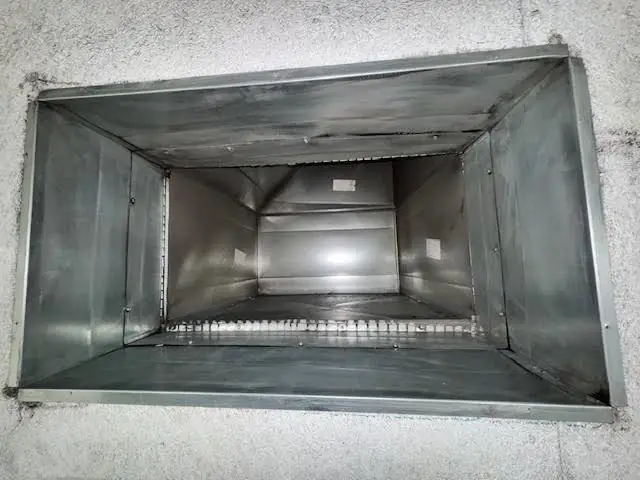
Fire remediation air duct cleaning should be planned as one part of a coordinated restoration project. The question is not simply whether smoke reached the building, but which HVAC components are affected, whether their materials remain serviceable and how cleaning will be checked.
This guide focuses on defining and documenting HVAC cleaning work. For the homeowner’s sequence of decisions after a fire, read air duct cleaning after house fires. For a consultation, see BenzVac’s New York fire damage cleanup service.
Define the affected HVAC system
Identify each air handler, its supply and return pathways, and the rooms served. Record the reported smoke exposure and visible conditions rather than assuming that every system in a property has the same damage. A system that was switched off may still need assessment; its operating status alone does not prove that it is clean.
Site access and equipment operation should follow the restoration team’s directions. A cleaning contractor’s scope should not be confused with structural, electrical or occupancy clearance.
Why Do You Need Air Duct Cleaning in Fire Remediation?
 Fire Remediation
Where inspection identifies removable residue in accessible HVAC components, source-removal cleaning can form part of the restoration work. The assessment should also identify damaged or unsuitable materials that need another solution. Cleaning does not repair heat damage or establish that all hidden materials are serviceable.
Specify components and access limitations
- Accessible return and supply ducts, registers and grilles.
- Air-handler cabinet and blower components included in the scope.
- Coils, drain pans and filter sections requiring separate evaluation.
- Lined, flexible or insulated duct materials and any visible damage.
- Sections that cannot be inspected or cleaned through available access.
Describe each system in the estimate. If more access or replacement work becomes necessary, document it and obtain authorization before expanding the job.
Coordinate removal, drying and cleaning
The restoration plan should establish the sequence for damaged-material removal, water-related work, surface cleaning, HVAC cleaning and repairs. Discuss how unaffected spaces will be protected and how later work could reintroduce debris. The appropriate collection tools and agitation methods depend on the equipment and duct materials.
For background on system cleaning methods, review NADCA’s proper cleaning methods information. Our commercial air duct cleaning page provides service information for business properties.
Separate residue removal from odor treatment
An odor complaint does not identify a single source or a single treatment. Residue may remain in building materials or contents outside the HVAC system. Do not use fragrance to treat an unresolved source or assume that a less noticeable odor proves the property is safe.
Chemical or ozone treatment should not be a do-it-yourself shortcut. The EPA’s information on ozone generators explains the limitations and health concerns. Any proposed treatment needs an appropriate assessment, product instructions and a defined safety plan; this guide does not provide application instructions.
Agree on completion documentation
Keep a record of the equipment and areas cleaned, photographs of accessible inspected sections where appropriate, methods used, findings and unresolved limitations. Completion records should distinguish cleaning from repairs or replacement and identify work that another provider must perform.
For managed properties, record who reviewed the completed scope and which systems can be returned to operation under the restoration plan. The absence of visible residue in one photographed duct does not verify every concealed section.
Request an inspection-based estimate
Post-fire cleaning costs depend on system size, materials, residue, access and the agreed work. A generic per-vent calculation cannot establish a restoration price. Provide the site assessment and system information when requesting an estimate, and ask which items are excluded.
BenzVac can discuss the HVAC cleaning scope with the property owner or restoration team. Keep the written proposal and completion notes with the broader restoration records.